Short answer: A QSO is “not in log” when the other station’s log has no matching entry for a contact that is in yours. The cause is not always your mistake: it may be a wrong callsign, a time or band that does not match, an incomplete exchange, or a contact that the other station simply never logged. Knowing the typical patterns helps you prevent the ones that belong to you and stop worrying about the ones that do not.
What “not in log” means
When contest committees check logs in general, they compare the entries of different stations. If you report a contact with a station and that station’s log has no matching contact with you, the contact is called not in log, often shortened to NIL. In many contests, a QSO that cannot be matched may be removed from your score, and sometimes a penalty is added. The exact treatment depends on the contest, so check the current rules for each event.
The important point is that a NIL is a statement about two logs, not about one. Your log may be perfect and the other log may be missing the contact, or the reverse. Our earlier article on typical NIL causes and prevention gives the overview; this article looks at the same topic from the point of view of a single QSO and asks: what exactly could have gone wrong, and on which side?
Cause 1: The callsign is wrong in your log
This is the most common reason. You copied a callsign with one letter or digit wrong, the other station logged its true callsign, and the two entries cannot be matched. From the other side, it looks as if you never worked them; from your side, you have a QSO with a station that may not exist or that never answered you. These are classic busted calls. A pair of letters that sound alike, a number confused under QRM, or a partial call completed from memory are typical sources.
The best prevention is to confirm the callsign during the QSO whenever there is doubt. If the other station repeats your callsign correctly in its reply, that is a good sign that you were heard, but it does not prove that you heard them. Compare with what you wrote. See busted callsigns in contest logs for the habits that reduce this problem.
Cause 2: The callsign is wrong in their log
The reverse also happens. The other station may have logged your callsign incorrectly, and then your QSO does not match theirs. You can do little about this except to send your callsign clearly and repeat it when asked. On SSB, standard phonetics help. On CW, send at a speed the other station can copy, and repeat the callsign if the conditions are poor. If you notice that a station asked you to repeat your call twice, there is a higher chance of a mismatch later.
When a committee finds your callsign in another log with one letter wrong, the system often notices the pattern and may give you credit, depending on the rules. Do not count on that. Where a contact matters, a short confirmation at the end of the exchange is a cheap safeguard.
Cause 3: Time and band do not match
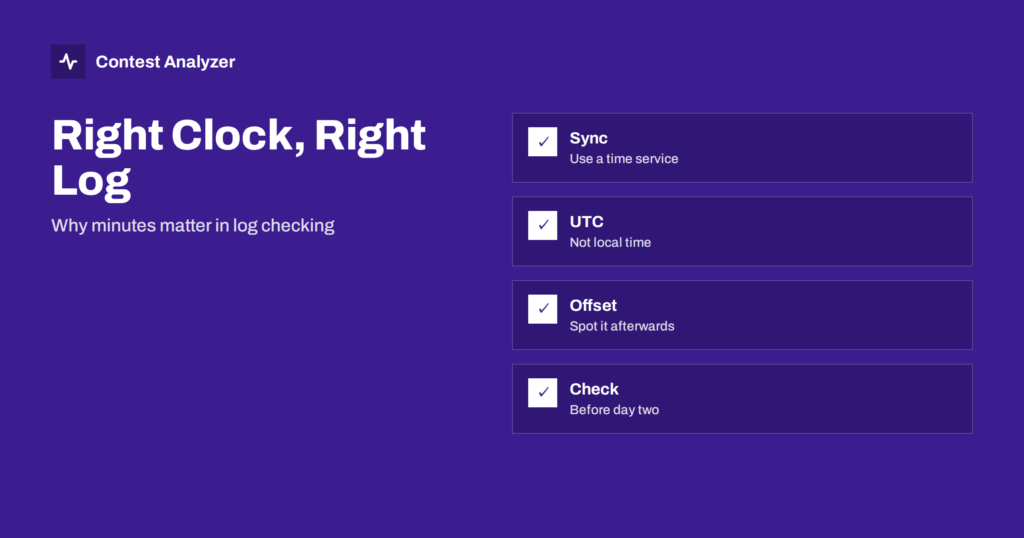
A contact needs to match not only by callsign but also by time and band. If your computer clock is wrong by many minutes, your QSOs may fall outside the tolerance used when logs are compared. A QSO logged on a wrong band, for example after a band switch where the logger did not follow the radio, can also fail to match even when everything else is right. Both are problems of the station, not of the other operator.
A clock that is checked before the contest and again on the second day prevents the first. A logger connected to the radio, with the band shown clearly in the entry window, prevents the second. The article on wrong PC clock or UTC errors describes the symptoms and what to do. If your log seems to show a block of QSOs with a constant offset, the clock is the likely reason.
Cause 4: The exchange is incomplete or wrong
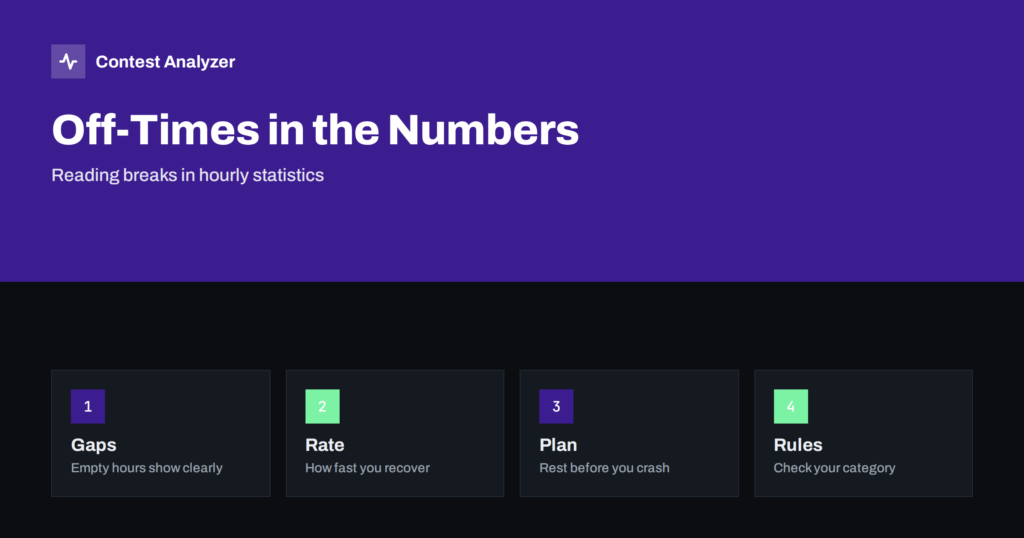
Some contests require that the exchange is copied correctly for a QSO to count. If you logged the contact but the exchange does not match what the other station sent, the match may fail, or the QSO may be accepted with a penalty. The most typical errors are a wrong zone, a transposed digit in a number and a missing element in a longer exchange. Under fatigue, these mistakes cluster in certain hours.
The prevention is a calm, repeatable procedure: copy the exchange, check it against what you expect, ask for a repeat of only the unclear element, and log the QSO only when the exchange is complete. If a QSO is incomplete when the other station moves on, decide whether to log it or drop it. A QSO you are not sure about is often better not logged than logged wrongly, depending on the rules.
Cause 5: The contact was never logged
It sounds trivial, but some NILs are simply contacts that one side did not enter. The operator was busy, the program was not in the right window, the key press did not register, or a pileup moved on too fast. In multi-operator stations, a second computer may not have been synchronised, and some QSOs end up on one machine only. If you merge logs later, check for gaps; see merging multi-op logs for the typical problems.
A good habit is to look at the logging window from time to time to confirm that the last QSOs are really there. A routine glance after every few contacts costs nothing and catches a window that has lost focus.
Cause 6: The QSO was not completed
Sometimes only one side believes that the QSO was finished. You sent your exchange, heard something that sounded like an acknowledgement, and logged. The other station never received your exchange fully and did not log you. This happens most often in weak conditions or in a pileup. A clear final confirmation, such as a thank-you with the callsign or a short end-of-QSO signal, helps both sides to know that the contact is done.
If you are in doubt, repeat your exchange once more. It costs a few seconds. In a long contest with many hours, the cost is small compared to the value of a verified QSO.
What you can check afterwards
You cannot see the other station’s log, but you can find the likely candidates for NIL in your own. Look at callsigns that appear only once and look unusual, QSOs at times when your clock was in doubt, and contacts with notes that you wrote during the contest. If your logger kept a note, review it. Contest Analyzer helps with part of this: it checks every callsign and every zone against official license databases and several independent reference sources and shows only the few QSOs worth a second look, so you can correct a callsign before you submit. It cannot know whether another station logged you, and it does not claim to; it simply reduces the number of errors that are yours.
For more on how to use the results, see the 30-minute routine that suits the last days before the deadline.
A practical example
Imagine a station that reports a contact at 14:32 on 20 metres with a callsign that ends in one letter, while the other station’s log shows a contact with a nearly identical callsign at 14:33. The pair looks like one QSO with a one-letter difference in the callsign and a one-minute difference in time. A human reviewer would see it at once as a likely match with a busted call; a strict automatic match may not. This is why small errors in time and callsign together are more damaging than either alone.
Now imagine the same contact with the clock wrong by ten minutes. Even with a perfect callsign, the entry falls far from the other record and may not be matched. These simple pictures explain why the tidy habits matter: a correct clock and a confirmed callsign keep both parts of the match close to the truth.
Think also about the QSOs that never had a chance. Calling a station during a pileup, getting a short report and moving on can leave you uncertain whether the other side ever heard your full exchange. If you are unsure, the QSO may be better dropped from the log than reported, depending on how the rules treat unmatched contacts. Check the penalty system of each contest in the current rules, because the cost of a NIL differs from event to event and sometimes from category to category.
Related reading
- Not-in-Log (NIL) QSOs: Typical Causes and Prevention
- A Dupe or a Busted Call? How to Tell Them Apart Afterwards
- Unique Calls in Contest Logs: Real Uniques or Busts?
The bottom line
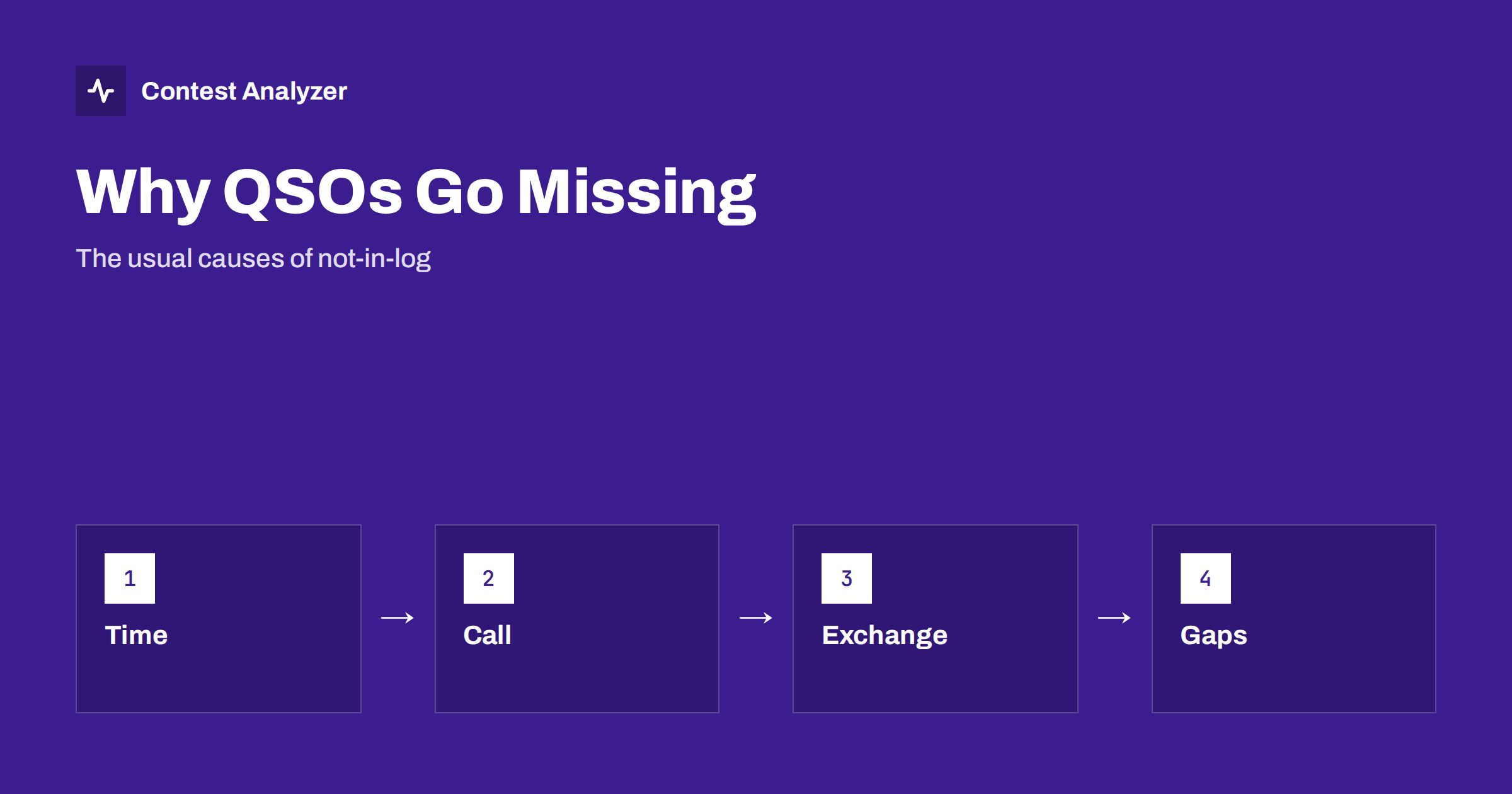
A QSO that is not in the other log has many possible causes: a wrong callsign on either side, a time or band mismatch, an incomplete exchange, a contact that was never logged or a QSO that one side did not finish. You control about half of these. Confirm the callsign, keep the clock right, complete the exchange before you log, and glance at the log window regularly.
FAQ
Is a NIL always my mistake?
No. The other station may have made the mistake, or the contact may not have been logged by them at all. Only the comparison of both logs shows which side is wrong.
Does a wrong time cause a NIL?
It can. If the time difference is larger than the tolerance used when logs are compared, the entries may not be matched.
Should I log a QSO I am not sure about?
Often it is better to ask for a repeat or drop the contact. The right answer depends on the rules of the contest, so check them.
Can I find NIL candidates before I submit?
You can find some of them: unusual single callsigns, times affected by clock problems and QSOs with doubtful notes.